
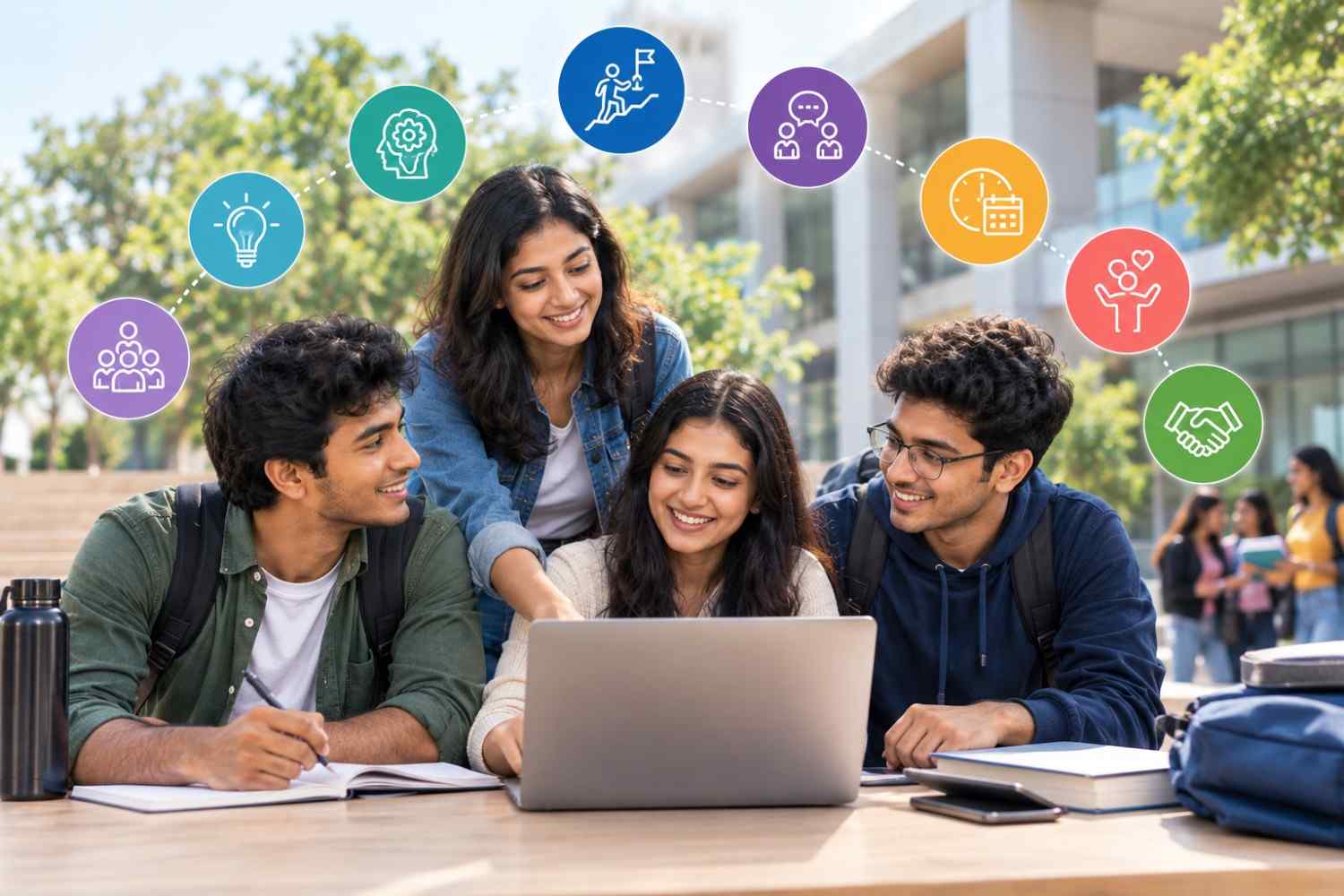
Academic achievement opens up plenty of opportunities. But life after college asks for more than academic knowledge. Someone can score well in exams and still struggle with everyday finances, workplace communication, stressful situations, or making independent choices.
This is where life skills for college students make a real difference. The World Health Organization (WHO) recognises skills such as communication, decision-making, problem-solving, self awareness, interpersonal skills, and coping with stress and emotions as important life skills for handling everyday challenges.
As students move from college to internships, workplaces and independent living, these skills become even more important. Soft skills training and behavioural training can give students a chance to practise these skills through real situations, guidance and feedback.
Here are some of the key life skills students can start building before they take their next step.
What Are Life Skills and Why Do They Matter?
Life skills are practical abilities for everyday life. They help people manage responsibilities, relationships, challenges, and decisions.
They overlap with hard and soft skills, but each has a different role.
| Hard skills | Soft skills | Life skills |
| Technical and academic knowledge | Communication, teamwork and adaptability | Budgeting, decision making and independent living |
For example, time management helps students complete projects on time. It also supports teamwork and a healthy work-life balance.
After graduation, schedules become less structured. Financial responsibilities also increase. Workplace interactions can become more complex. Building life skills early can help students to handle these changes with confidence.
1. Communication Skills
Strong communication is an important career readiness skill. Students should learn to:
● Speak clearly in presentations and interviews
● Organise thoughts before speaking
● Draft professional emails and messages
● Listen carefully and ask questions
● Express opinions respectfully
● Connect with seniors, alumni and recruiters
For speaking, it is helpful to use a simple three part structure: point, explanation and example.
Communication can become natural with regular practice, through presentations, discussions in groups, and soft skills training.
2. Time Management and Self-Discipline
College life involves academics, activities, social commitments, and personal responsibilities.
Students can improve time management for college students by:
● Planning weekly priorities
● Breaking large tasks into smaller steps
● Using calendars and task lists
● Blocking time for focused work
● Limiting distractions
● Scheduling enough rest
If procrastination is a problem, start with just two minutes. Beginning a task is often easier than thinking about the entire task.
Self-discipline is not about being productive every minute. It is about managing priorities consistently.
3. Financial Literacy
Managing money is an important part of becoming independent.
Students should learn to create a monthly budget and track expenses such as food, travel, entertainment, and savings. They should also understand basic concepts like loans, interest, credit scores, and emergency funds.
Digital safety matters too. Students should know how to spot phishing attempts, fake job offers, suspicious payment requests, and fraudulent lending apps.
Understanding salary, deductions, taxes, insurance and retirement contributions can also make the transition to working life easier.
4. Emotional Intelligence and Stress Management
Emotional intelligence helps students to understand their emotions and respond calmly instead of reacting impulsively.
It involves skills such as:
● Recognising emotions
● Pausing before reacting
● Handling criticism
● Managing academic and peer pressure
● Setting healthy boundaries
● Saying no respectfully
● Bouncing back from setbacks
A low mark or rejected job application is not a final judgement. It can show where there is room to improve.
Students should also watch for signs of ongoing stress or burnout. Talking to a counsellor, mentor or trusted person can help when things feel difficult.
Behavioural training and resilience focused programmes can also help students to build these skills.
5. Critical Thinking and Problem Solving
Students face decisions every day, from group project issues to choosing internships.
A simple decision-making process is:
- Define the problem.
- List possible options.
- Consider the likely outcomes.
- Make a decision.
- Review what worked.
Critical thinking also matters online. Students should check sources, look beyond headlines, and question information shared on social media.
These life skills for college students can be useful in everyday situations from resolving a disagreement with a roommate to managing a delayed project or making an important career decision.
6. Teamwork, Leadership and Conflict Resolution
College is a great place to build teamwork skills. Projects, clubs and events offer plenty of practice.
Students can learn to:
● Share tasks fairly
● Meet team deadlines
● Keep others updated
● Give and accept feedback
● Take responsibility for mistakes
Leadership is not always about having a title. Taking initiative, supporting teammates or helping solve a problem also shows leadership.
Disagreements are part of teamwork. Listen first. Explain your point calmly. Find common ground and agree on the next step.
7. Career Readiness Skills
Career preparation does not have to wait until the final semester.
Students can start by creating a professional resume and LinkedIn profile, documenting their projects and achievements, and practising common interview questions. Using the STAR method Situation, Task, Action, and Result can help them to structure answers to behavioural interview questions.
Internships, volunteering, certifications and practical projects can also help students to build experience alongside their academic qualifications.
Professional etiquette matters too. Punctuality, clear communication, meeting etiquette and responsible use of workplace platforms can all shape how employers perceive a candidate.
8. Independent Living and Adaptability
Moving away from home often means managing responsibilities independently.
Useful skills include:
● Preparing simple meals
● Maintaining a healthy routine
● Managing personal healthcare
● Handling cleaning and household tasks
● Sharing expenses with roommates
● Understanding rental agreements
● Keeping important documents safe
● Knowing emergency contacts and basic first aid
These everyday abilities can make the transition to independent living much easier.
9. Digital Literacy and Responsibility
The digital presence of a student can become part of their professional identity. Checking privacy settings, keeping the online presence professional, and being mindful of what they post are important.
Basic social engineering, password and multi-factor authentication, and safe use of public Wi-Fi should also be taught in the context of digital safety.
Students should check information, exercise their own judgment and observe academic integrity rules while using generative AI and productivity tools to enhance learning and work efficiency.
How Can Students Build These Skills?
Life skills can be developed through practice. Students can build them through clubs, volunteering, internships, projects, mentoring, and peer activities.
Structured behavioural skills training can provide additional support through role-playing, practical scenarios, and expert feedback. Colleges can also include behavioural training services and soft skills for students as part of placement preparation and wider student development programmes.
Conclusion
Academic education is the basis for a successful career, but confidence in life and work requires effective practical skills alongside academic achievements. These communication, time management, financial awareness, problem-solving, emotional intelligence, and adaptability skills can all make the transition from college to work smoother.
Students don't have to learn all the skills at once. It is important to start with a single thing, like implementing a weekly routine, a budget, communication, or building a professional profile.
For institutions looking to develop these capabilities, Enable IST offers soft skills and life skills for college students to help learners to build practical and confident capabilities.
Frequently Asked Questions
1. What are the most useful life skills for college students?
Communication, time management, financial planning, problem-solving, teamwork, and emotional resilience are essential life skills that help students to manage college, relationships, and future careers.
2. Why are life skills as valuable as academic marks?
Academic knowledge shows what students know, while life skills help them to apply that knowledge. Skills such as communication, adaptability, and decision-making can support both personal growth and career success.
3. What financial skills should students learn before graduation?
Students should learn budgeting, saving, managing expenses, understanding credit, and using digital payments safely. These skills can help them become financially responsible and make informed decisions after graduation.
4. How can students manage stress during exams and placements?
Set realistic goals, follow a study or preparation schedule, take regular breaks, and get enough sleep. Staying physically active and talking to someone you trust can also help to manage stress.
Read More - Corporate Training Programs: How to Choose the Right One for Your Team
Behavioural Training



0 Comments
Leave a Comment