
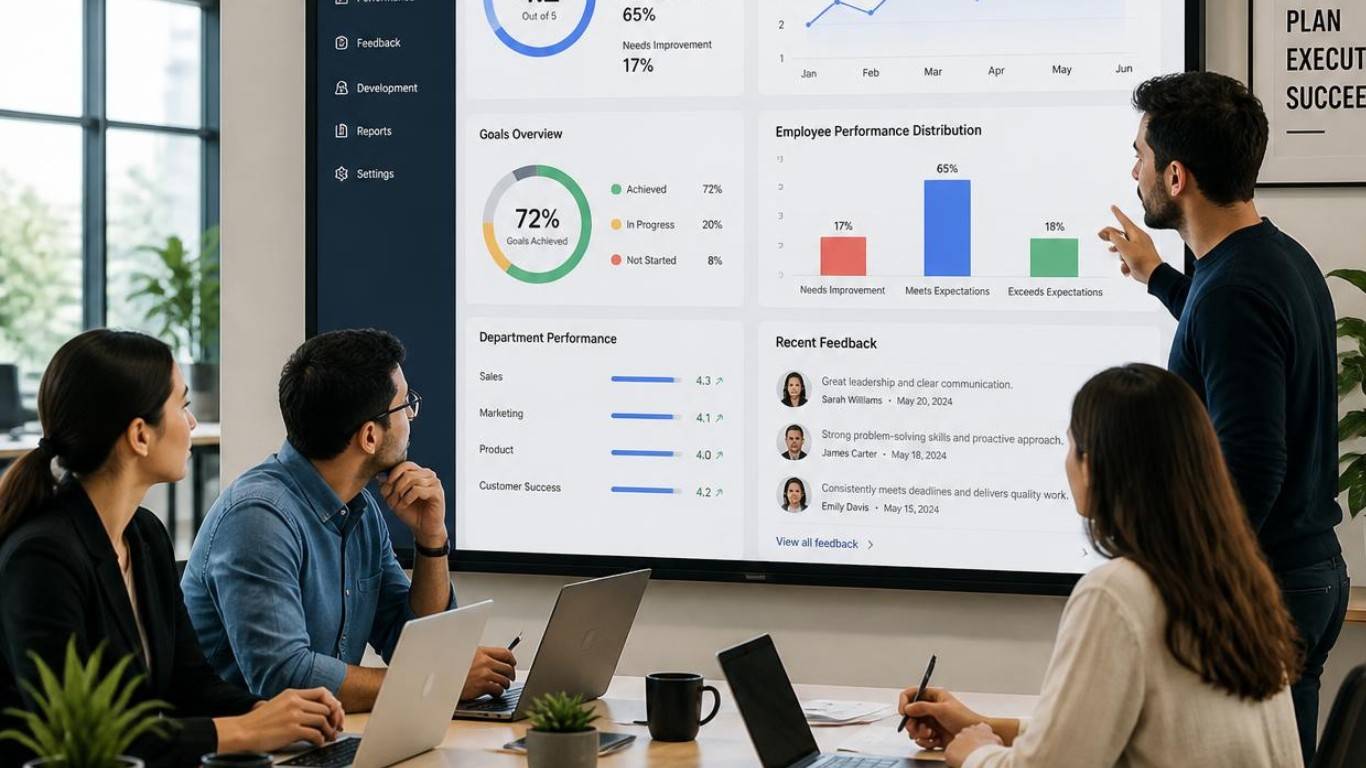
Performance Management System: Best Practices for Modern Organizations
How effective is your performance management process beyond annual appraisals? Today, organizations need more than periodic evaluations to improve performance and achieve business goals. For HR leaders and managers, the challenge is creating a workplace where employees stay engaged, develop their skills, and contribute consistently. As workplace expectations continue to grow, traditional appraisal methods are no longer enough. This guide explores practical ways to strengthen performance management and build a culture of continuous improvement. Explore how Enable IST helps organizations create high-performing teams through expert HR solutions and behavioural training services.
What is a Performance Management System?
A performance management system is a structured approach to planning, monitoring, evaluating, and improving employee performance. Unlike traditional annual reviews, the modern performance management system focuses on continuous feedback, coaching, and development. It helps employees to understand their responsibilities while ensuring their contributions support organizational goals.
Core Objectives of a Performance Management System
Set Clear and Measurable Goals
Define SMART goals and align them with business priorities. Clear expectations help employees to stay focused and improve accountability.
Encourage Continuous Feedback
Replace once-a-year reviews with regular one-on-one meetings, coaching sessions, and constructive feedback. Continuous performance management enables employees to address challenges early and improve consistently.
Focus on Employee Development
Performance management should support growth, not just evaluation. Create personalized development plans, identify skill gaps, and provide opportunities for technical and behavioural skills training.
Use Data to Drive Decisions
Measure employee performance using relevant KPIs, OKRs, and performance metrics instead of relying on subjective opinions. Objective data leads to fairer evaluations and better decision-making.
Recognize and Reward Performance
Timely recognition motivates employees and reinforces positive behaviours. Reward systems, promotions, and appreciation programs contribute to stronger employee engagement and retention.
Traditional Performance Management vs Modern Performance Management
Traditional performance management focused mainly on annual appraisals and evaluating past performance. In contrast, modern performance management promotes continuous feedback, employee development, and regular coaching to improve both individual and business performance. The table below highlights the key differences between these two approaches.
| Traditional performance management | Modern Performance Management |
| Annual performance reviews | Continuous feedback and regular check-ins |
| Manager driven evaluations | Employee participation and shared ownership |
| Employee participation and shared ownership | Real-time coaching and development |
| Paper based or manual processes | Technology driven performance management |
| Limited feedback, usually once a year | Frequent two day feedback and coaching conversations |
| Decisions based on manager observations | Data-driven decisions using KPIs, OKRs, and analytics |
| Focus on past performance | Focus on continuous improvement and future growth |
| Limited career discussions | Career development through personalized learning and coaching |
| Individual performance measured in isolation | Goals aligned with team and business objectives |
Key Components of an Effective Performance Management System
More than an evaluation framework, an effective performance management system provides a structured approach for aligning individual contributions with business goals while supporting continuous improvement and professional development. The following performance management components are essential to building a successful employee performance system.
Goal Setting
Clear goals provide direction and align individual efforts with organizational priorities. Organizations should define SMART Goals that are Specific, Measurable, Achievable, Relevant, and Time-bound. Combining OKRs (Objectives and Key Results) with KPIs (Key Performance Indicators) helps to measure strategic outcomes and operational performance. Well-defined roles and responsibilities ensure everyone understands their contribution to business objectives.
Continuous Feedback
Regular feedback keeps performance on track throughout the year. Weekly check-ins and monthly discussions allow managers to address challenges, acknowledge achievements and provide timely guidance. Peer feedback, coaching and recognition encourage open communication and continuous improvement.
Performance Reviews
Performance reviews offer a structured way to assess progress and identify future priorities. Quarterly, mid-year and annual reviews provide a balanced view of achievements over time. Including self-assessments alongside manager evaluations encourages meaningful discussions and shared accountability.
Employee Development Plans
Development plans help close skill gaps and prepare employees for future opportunities. A structured approach includes skill gap analysis, personalized learning guides, career planning, leadership development, and targeted training recommendations that support long-term capability building.
Coaching
Coaching helps individuals to build confidence, strengthen workplace behaviours and improve decision-making. Managers who adopt a coaching mindset can provide regular guidance, support behavioural development, mentor future leaders and offer career advice that prepares team members for greater responsibilities.
Rewards and Recognition
Recognizing contributions reinforces positive behaviours and motivates teams to perform consistently. Performance incentives, spot awards, internal promotions, career advancement opportunities and formal recognition programs strengthen engagement, improve retention and encourage a culture of excellence.
Performance Management Cycle Explained
The performance management cycle is a continuous process that helps organizations to align employee performance with business goals while promoting regular feedback, development and improvement.
Performance Management Cycle
Planning
↓
Goal Setting
↓
Continuous Feedback
↓
Mid-Year Review
↓
Coaching
↓
Performance Evaluation
↓
Development Planning
↓
Rewards & Recognition
↓
Repeat Cycle
Planning - Define business priorities, performance expectations and employee responsibilities.
Goal Setting - Set SMART goals, OKRs and KPIs aligned with organizational objectives.
Continuous Feedback - Provide regular feedback through check-ins, coaching and recognition.
Mid-Year Review - Review progress, discuss challenges and realign goals if needed.
Coaching - Support employees with guidance, skill development and career advice.
Performance Evaluation - Assess performance using measurable outcomes, manager evaluations, and self-assessments.
Development Planning - Create learning plans to address skill gaps and support career growth.
Rewards & Recognition - Recognize achievements through incentives, promotions, and appreciation programs.
Best Practices for Performance Management System
A successful employee performance management system is built on clear goals, regular communication and continuous improvement. The following performance management best practices help organizations to improve employee performance and achieve business objectives.
Align Individual Goals with Business Goals
Ensure every employee understands how their work contributes to organizational success. Clear goal alignment improves focus, accountability, and overall business performance.
Set SMART Goals
Use SMART Goals that are Specific, Measurable, Achievable, Relevant, and Time-bound. Well-defined goals provide clarity and make performance easier to track.
Use OKRs Alongside KPIs
OKRs help teams achieve strategic objectives, while KPIs measure ongoing performance. Using both together provides a balanced view of progress and business outcomes.
Replace Annual Reviews with Continuous Feedback
Move beyond annual appraisals by encouraging regular feedback, monthly reviews, and continuous performance discussions. Frequent feedback helps employees improve and stay aligned with changing priorities.
Conduct Structured One-on-One Meetings
Schedule regular one-on-one meetings to discuss progress, address challenges, provide coaching, and support career development.
Invest in Employee Development
Support long-term growth through upskilling, behavioural training, leadership development and personalized learning opportunities.
Encourage Two-Way Feedback
Create a culture where managers, employees and peers share constructive feedback. Including 360-degree feedback encourages transparency and continuous learning.
Make Decisions Using Performance Data
Use performance metrics and HR analytics to make fair, objective decisions on evaluations, promotions, and development opportunities.
Recognize and Reward Performance
Celebrate achievements through recognition programs, incentives, spot awards and career advancement opportunities to keep employees motivated.
Develop Managers into Effective Coaches
Equip managers with coaching, behavioural and leadership skills to guide teams effectively. Enable IST supports organizations through expert behavioural training Services, leadership development, and HR solutions.
Review the Performance Management System Regularly
Regularly assess the system using employee feedback, manager insights, and business goals to keep it effective and aligned with organizational needs.
KPIs Every Organization Should Track
Tracking the right performance metrics helps organizations measure employee performance, monitor progress, and support better business decisions.
| KPI (Key performance indicator) | Business Purposes |
| Employee Productivity | Measure efficiency and output |
| Goal Achievement | Track progress against objectives |
| Attendance | Monitor reliability and punctuality |
| Customer Satisfaction | Evaluate service quality |
| Employee Engagement | Assess workforce commitment |
| Training Hours | Measure learning participation |
| Project Delivery | Track timely execution |
| Sales Performance | Monitor revenue contribution |
| Quality Score | Measure work accuracy |
| Retention Rate | Evaluate employee retention |
Common Performance Management Mistakes
Even a well-designed performance management system can fail if common mistakes are ignored. Relying only on annual reviews limits continuous improvement. Unclear goals create confusion and reduce accountability. Poor manager communication and lack of coaching affect employee performance. Ignoring employee feedback and using generic KPIs can lead to unfair evaluations. Regular follow-ups and a transparent process are essential for long-term success.
How Behavioral Training Improves Performance Management
A performance management system is only effective when managers and employees have the right behavioural skills. Clear communication, active listening, emotional intelligence, and constructive feedback lead to more meaningful performance conversations. Behavioural training also helps managers to handle difficult discussions, build trust and improve team accountability. Through its behavioural training Services, Enable IST helps organizations to develop these workplace skills, creating stronger leaders and high-performing teams.
Role of HR Consulting in Building a Strong Performance Management System
Building a performance management system requires more than selecting review cycles and KPIs. Organizations need a framework that reflects their goals, roles, and culture. HR consultants help to design performance frameworks, define competencies, align leadership, and establish consistent evaluation standards. With expert HR Services and practical HR solutions, Enable IST supports organizations in implementing performance management systems that drive employee growth and business success.
Technology and Performance Management Systems
Modern HR Technology simplifies performance management by automating goal tracking, performance reviews, and feedback collection. Real-time dashboards and analytics provide managers with valuable insights, while AI-powered tools help identify performance trends and development opportunities. Employee self-service portals also improve transparency by allowing employees to track goals, access feedback, and monitor their progress independently.
Performance Management for Hybrid and Remote Teams
Managing performance in hybrid and remote workplaces requires greater visibility and communication. Organizations should focus on clear goals, regular virtual check-ins, digital collaboration, and outcome-based performance measurement rather than monitoring hours worked. Recognizing achievements and maintaining consistent coaching also help remote employees stay engaged, productive, and connected with their teams.
Performance Management Implementation Guide (90 Days)
Implementing a Performance Management System becomes more effective when introduced in phases.
● Days 1-30: Assess and Plan
Review current processes, gather employee feedback, align leadership expectations and define performance goals.
● Days 31-60: Prepare and Pilot
Train managers, introduce behavioural skills training, implement HR technology and launch a pilot program.
● Days 61-90: Roll Out and Improve
Expand the system across the organization, collect feedback, refine KPIs and establish a regular performance review process.
Why Organizations Choose Enable IST
Organizations choose Enable IST for its practical approach to building high-performing workplaces. Through expert HR services and behavioural training services, Enable IST helps organizations to design performance management frameworks that align with their business goals and workplace culture. Its focus on competency development, leadership capability, manager coaching and HR solutions improve employee performance, strengthen leadership and create a culture of accountability and continuous learning.
Final Thoughts
An effective performance management system goes beyond annual reviews. It creates a culture of continuous improvement through clear goals, regular feedback, manager coaching and employee development. By following proven performance management best practices and strengthening workplace behaviours, organizations can improve engagement, productivity and long-term business performance. With expert HR Services, customized HR solutions and behavioural training services, Enable IST helps organizations to build performance management frameworks that support both employee growth and business success.
Frequently Asked Questions
● What is a Performance Management System?
A Performance Management System is a structured process that aligns employee goals with business objectives through goal setting, continuous feedback, performance reviews and employee development.
● How is performance management different from performance appraisal?
Performance appraisal is a periodic evaluation of past performance, while performance management is an ongoing process focused on continuous improvement, coaching and development.
● What are SMART goals?
SMART goals are Specific, Measurable, Achievable, Relevant and Time-bound. They help set clear expectations and make performance easier to measure.
● Can small businesses use performance management systems?
Yes. Small businesses can adopt a simple performance management process using clear goals, regular feedback and measurable performance metrics without needing a complex system.
● How does behavioural training improve employee performance?
Behavioural training for employees strengthens communication, accountability, leadership and teamwork. These skills improve collaboration and make performance conversations more effective.
● How can Enable IST help organizations build a Performance Management System?
Enable IST helps organizations design practical performance management frameworks through HR services, behavioural training services, manager coaching, and customized HR solutions that support employee growth and business success.
Read More - Performance Management System: How HR Consulting Can Help You Build One That Actually Works
Behavioural Training




0 Comments
Leave a Comment